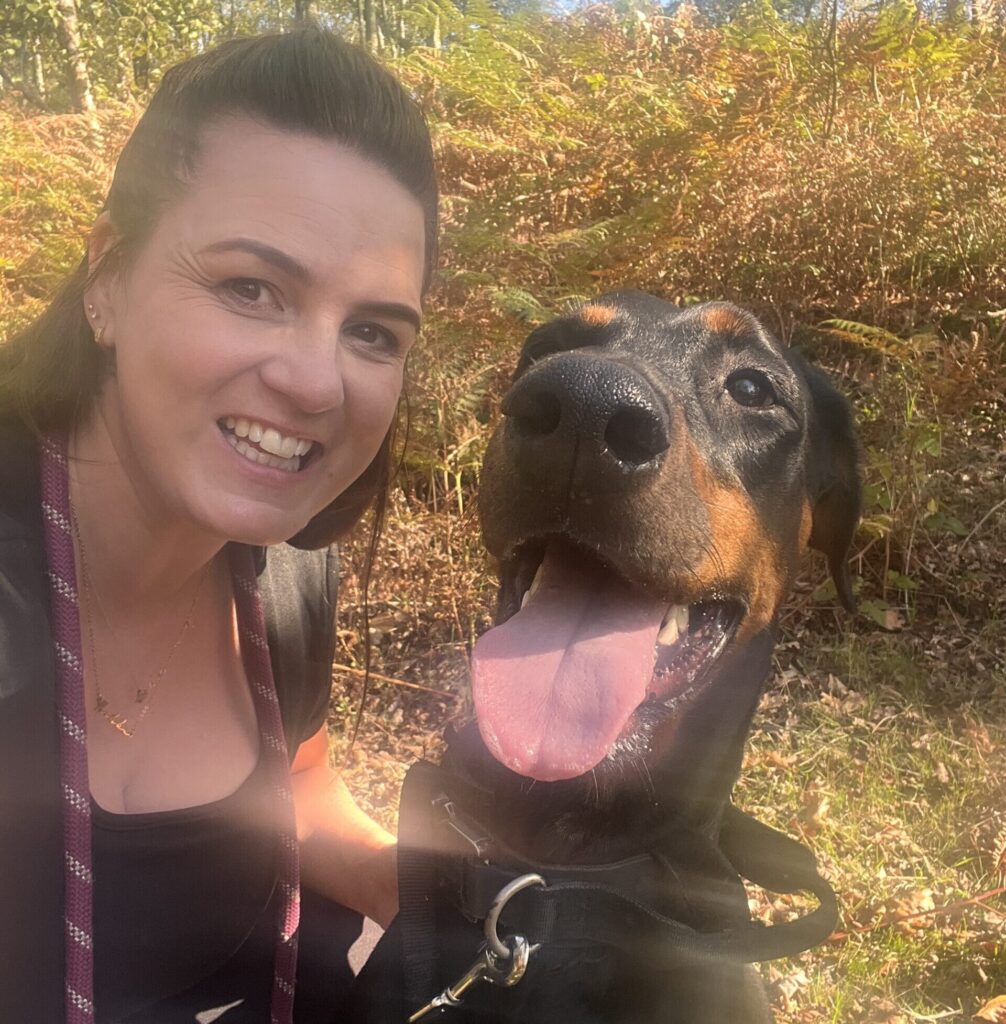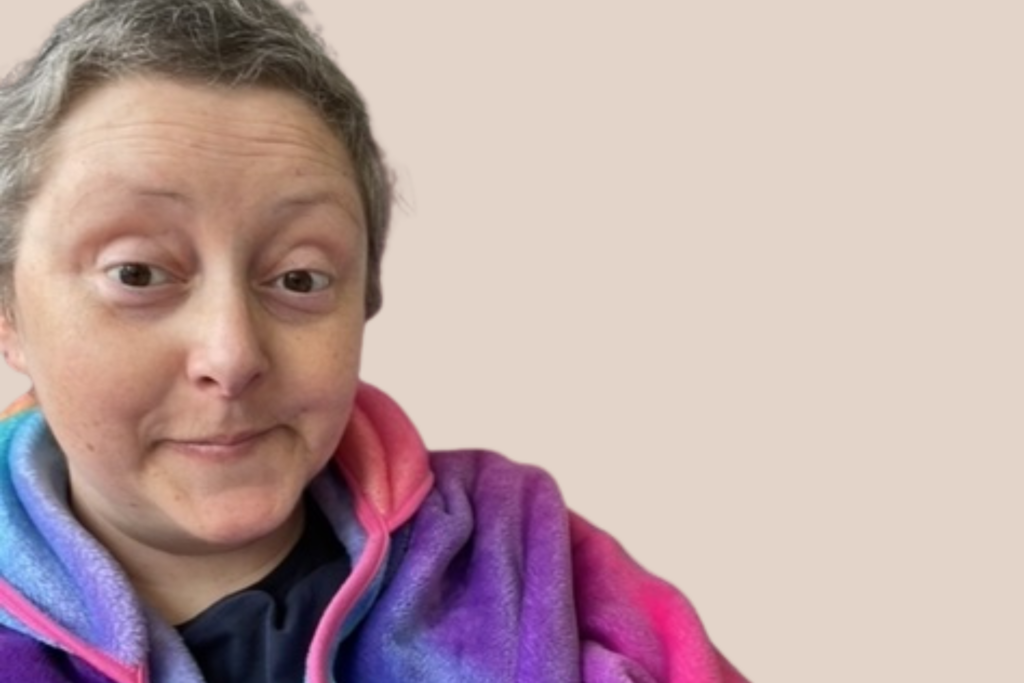
In 2023 I was diagnosed with bowel cancer and it was completely unexpected. I had been a teacher for 20 years and had just decided to leave and look for a new challenge and a change of scene. Around that time, I booked an appointment with my GP after experiencing some bloating. As my mum has Ulcerative Colitis, I was mindful of any changes in my bowel health.
Getting the bowel cancer diagnosis
It was shortly after Deborah James (BowelBabe) had passed away, and for peace of mind I asked the doctor if there was any chance it could be bowel cancer. He laughed and said, “You’re far too young,” but agreed to investigate further.
A week later, the surgery called and booked me in for a colonoscopy. Naturally, I was nervous. After the procedure, I even apologised for wasting their time, assuming it was something related to peri-menopause as I was in my early 40s.
The consultant quickly reassured me that I hadn’t wasted anyone’s time.
They had found something.
They had found a tumour.
It was bowel cancer.
I was incredibly grateful that my mum had come with me that day because telling family and friends about my diagnosis was one of the hardest things I’ve ever had to do. My eldest daughter had a friend whose mum had recently died from cancer, so we waited until I had been staged and had a treatment plan before telling the children.
Treatment, Complications and Emergency Surgery
Everything moved very quickly. Following a CT scan to confirm the diagnosis, I was referred for treatment within a couple of weeks. The plan was four rounds of chemotherapy, followed by surgery, and then another four rounds of chemotherapy afterwards.
My first chemotherapy session went smoothly. It wasn’t pleasant, but everything went according to plan. The second session was a very different story.
I became extremely unwell and was admitted to hospital. Despite barely eating, I was using the bathroom almost every hour. Although a doctor initially suspected chemotherapy-induced colitis, it took two weeks for the diagnosis to be confirmed and for steroid treatment to begin.
After three weeks in hospital, I was stable enough to go home, but by that point I had lost over three stone. Mentally, I was exhausted. I can completely empathise with anyone undergoing chemotherapy and understand the impact it can have on your mental health. There were days when I simply didn’t want to get out of bed.
Thankfully, I was surrounded by incredible support from my family, and my partner Simon was amazing throughout.
The focus then shifted to managing the colitis before resuming cancer treatment. Unfortunately, I developed a bowel blockage, causing extreme pain and resulting in emergency surgery.
It felt like the perfect storm. The combination of the tumour, colitis and interrupted chemotherapy treatment had left my bowels in complete turmoil.
When I woke up after surgery, I had a stoma.
Learning to Live with a Stoma
Before all of this, I had never spent any significant time in hospital. I had gone from being fit and healthy to spending three weeks in hospital with colitis, followed by another ten days recovering from surgery on a busy ward.
It was a huge adjustment.
The nurses were fantastic. Despite how busy they were, they provided constant support and reassurance. Fortunately, I got to grips with managing my stoma quite quickly and have continued to receive amazing support from community nurses throughout my recovery and chemotherapy treatment.
Today, I have completed chemotherapy and have adjusted to life with a stoma. I have also started discussing the possibility of a reversal with my doctor, but that’s a story for another day.
Ten months on from surgery, it’s been a rollercoaster journey. There have been challenges, setbacks and plenty of difficult moments, but I couldn’t have got through it without the support of those around me.
One thing that has helped me enormously is connecting with others who have had similar experiences. I love sharing my story and hearing theirs. Knowing that I’m not alone has made all the difference.