
What is Hirschsprung’s Disease and how has it impacted me? | by Rachel
Most people have heard of inflammatory bowel disease (IBD) as a reason for needing stoma surgery. But far fewer have heard of Hirschsprung’s Disease (HD): a rare condition that can have a life-changing impact from birth.
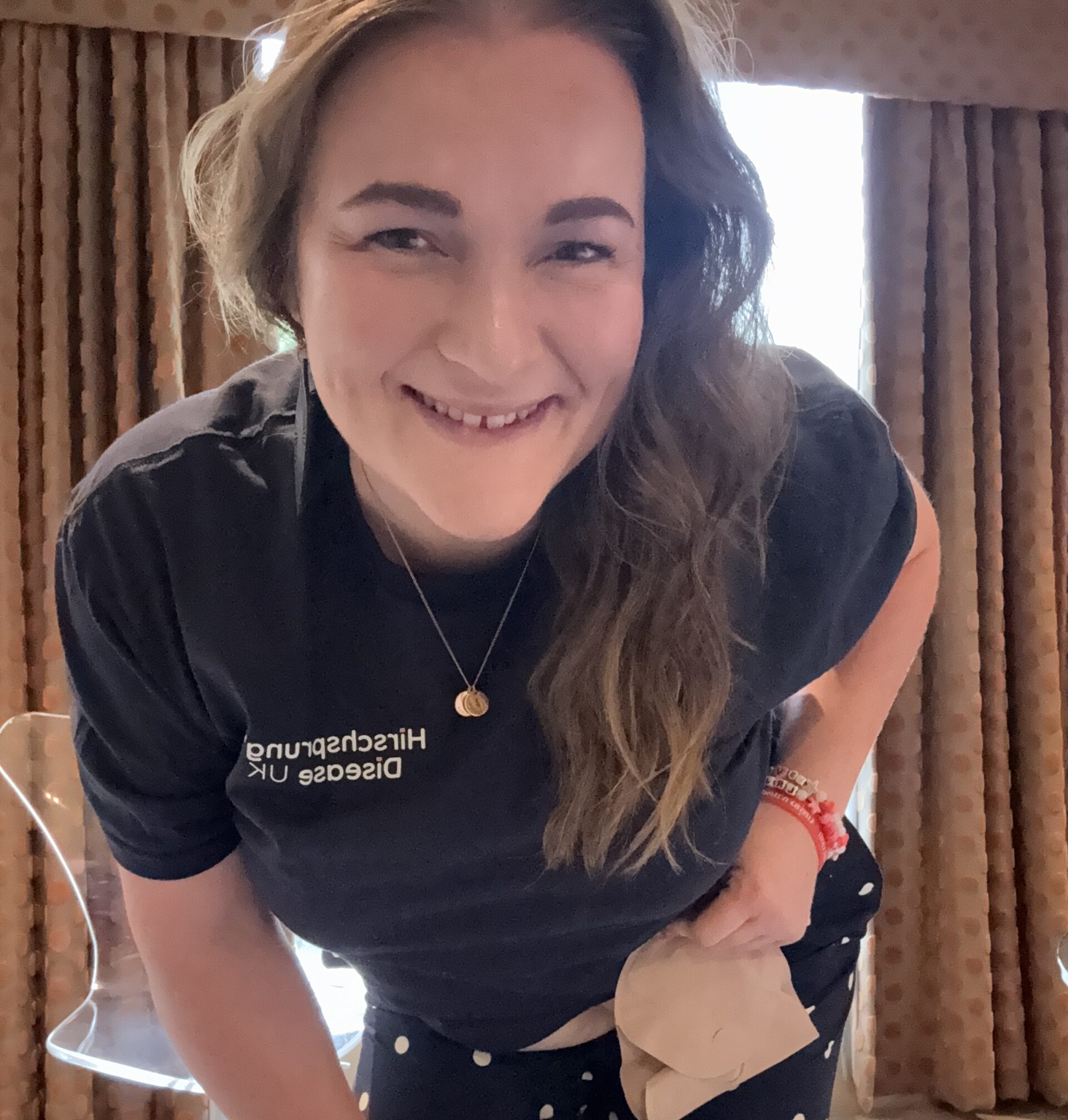
For me, it’s not just something I’ve learned about, it’s something I’ve lived through. In this blog, I share my experience of Hirschsprung’s Disease and how it has shaped my life.
What is it?
Presenting in around 1 in 5,000 babies each year in the UK, HD is a rare congenital condition that can occur with no family history of the disease. For babies born with Down Syndrome, it is significantly more likely that they will have HD.
Your intestines should rhythmically move stool along in a wave-like contraction. Nerve cells called ganglion cells should line the intestines to create this motion. Where these cells are not present is called aganglionic.
The types of HD are known as:
- Short-segment disease (most common): affects only the rectum and the lowest part of the colon (sigmoid colon). This accounts for approximately 80% of cases (per zero to finals).
- Long-segment disease: the aganglionosis extends beyond the sigmoid colon into a longer segment of the colon. It is less common (about 20% of cases) and often more severe.
- Total colonic aganglionosis (TCA): The entire colon is affected, accounting for around 5-10% of children with the disease.
- Total intestinal aganglionosis: a rare, severe form where nerve cells are missing from the entire large and small intestines.
- Small intestinal Hirschsprung’s Disease: nerve cells are missing from the rectum, colon, and the end of the small intestine.
(Referenced from MedlinePlus)
What are the symptoms?
Most patients will present shortly after birth with a number of symptoms, which may include tummy distention, severe constipation, difficulty feeding, and vomiting green bile. A rectal biopsy is performed to make a diagnosis of Hirschsprung’s Disease by identifying whether ganglion cells are missing. Before surgery, it is not clear how much of the intestine is affected.
Bowel washouts are taught to parents and, if successful, can be used without needing immediate stoma surgery following birth. The diseased section of intestine will then need to be removed later on through surgery, and if needed, a stoma will be formed. If too much of the intestine is affected, stoma surgery can be required within days. In these cases, bowel washouts may not be successful. This was certainly the case for myself and my children, where the disease was more severe.
Do all HD patients have a stoma?
No. For many cases, stomas can be reversed. This depends on other health factors, the surgeon, and the techniques used – this will determine the timeline. Every person is different. Stoma reversal surgery can come with its own set of complications, such as severe breakdown of the skin, needing to use the toilet frequently during the day (and sometimes at night), and adaptations to diet.
For myself, as an adult, I needed stoma surgery again after having a reversal at two years old. The symptoms of the disease became unmanageable, and my quality of life was poor. The disease can vary so much between individuals that it can be difficult to find others in the same situation. This can lead to feelings of isolation and loneliness.
What support is out there?
- Patients in the UK are usually under the care of a surgical team throughout childhood, with check-ups continuing into adulthood. For babies and young children, stoma nurses will oversee stoma care, and if reversal surgery has been performed, support is still needed to help manage ongoing symptoms. Medications to slow down toileting, and sodium chloride, can be prescribed if the patient struggles to retain fluids and electrolytes.
- Hirschsprung’s Disease UK is a source of support started by a group of parents, with the vision of creating a hub for parents and carers who hear about the condition for the first time and want to learn more, while feeling less alone. Look out for updates on their social media pages for resources and support.
- If social media is your thing, there are support groups on Facebook all over the world where people ask questions and share tips and life experience. Patients also use Instagram to document life with the condition, like myself, and are often willing to chat and answer questions you may have.
- Tom’s Hirschsprung’s Podcast is a fantastic resource full of stories from patients, with Tom starting the podcast to connect with others living with the condition. You might even see some familiar faces there too.
Please remember…
This is my own experience and knowledge that I have gained through living with the disease. You should always speak to a medical professional if you have any concerns about your own health, or that of a loved one. All patients’ experiences are individual to them, and this is mine. I hope that by sharing it, I can help others to feel less alone.
If you are a parent or carer of a baby and have just heard of the disease for the first time, it is completely normal to feel scared, confused, frustrated, and even cheated. Symptoms don’t show on scans and rarely present before birth, so the shock can be overwhelming. Please know you are not alone. The rest of us are out there, and many go on to live full and happy lives.
Want to join our ambassador community?
If you’re passionate about making a difference and sharing your story, we’d love to hear from you!
-
-
-
-
-

-
Looking for more advice and real-life experiences?
Keep the conversation going on our podcast, Beyond the Pouch! Hear real stories and honest chats all about life with a stoma.